
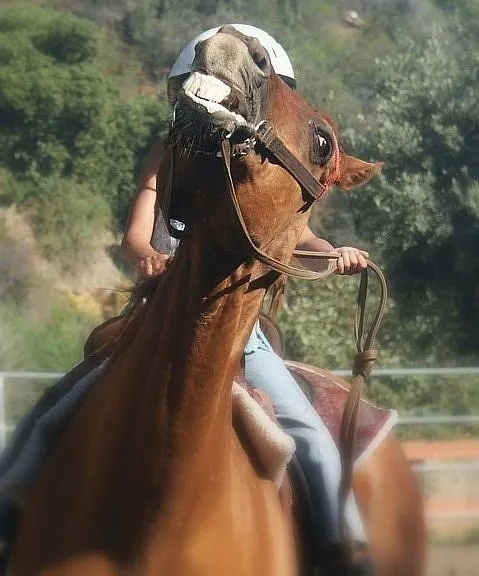
What makes horses stressed?
There really are so many factors when it comes to discerning why your horse may be agitated or stressed. If I want my horses to move with gusto all I have to do is flap a plastic bag yet how could I calm him down in a moment?
Environmental Factors
It certainly is true that environmental factors such as weather and sugars in the grass can instantly affect your horse’s behaviour.
Attitude and Thought Patterns
Yet what about our own attitude and thought patterns? Let’s rule out pain and lameness, as these are another issue in itself. It’s actually true that horses can see without us even speaking a word or giving a command. They are masters at reading our body language!
It sure is good to have an emergency toolbox to keep us safe when a horse is over-reactive, they could be. Hindquarter yields, backing your horse, one rein stops, dismounting and lunging to release energy. These are all really good tools when tension arises, yet did you ever think there could be a better way to condition your horse when he becomes stressed?
Body Language
Body language is an important factor when it comes to horses. It’s as simple as a hand clenching unconsciously on the rein that then transpires from the rein to the bit and causes tension straight to the horse. So how do we start to communicate with a horse that is already reactive? Well, it may sound funny yet I actually start with my thoughts. What’s the saying? “Leave your emotions at the gate.” Generally, this is not a possible action as humans are compulsive thinkers.
Positive Thoughts
What if you could picture yourself eating ice-cream in the park laughing and having fun. It sounds kind of crazy but it actually is a really powerful first step in helping your horse relax.
Thinking positive thoughts when your horse is reacting can help you soften your body and this will intern help you calm your horse. A relaxed body and calm mind focused on the positive can be communicated to your horse through your body language.
• Think of yourself as softening.
• Try deep breathing or singing or even smiling as this can physically change our brain ways and thus create different feelings which reflect in our own bodies.
• Remember a good feeling or memory. Memories are so powerful they can bring us to tears or make us smile with joy. The more time you can spend with your horse while feeling good will set you both up for success.
How can a thought really influence your horse?
Well, the truth is we are all carrying around stories of past failures and bad experiences with our horses? Horses actually don’t do expectations. So next time you start to feel a bit of disappointment with your horse’s reaction, start to imagine something that makes you feel joyous and happy.
It really is best to picture this feeling memory before you enter the paddock. Imagine it as a movie in front of your eyes. It really won’t work if you can’t actually feel the feeling of joy or happiness or safety. It’s just one of those things that need to be practised with feeling. It is also very helpful if the memory is completely different from horses as our brains will automatically associate horses to horses. So, think of something completely unrelated like roller-skating. This process is best done in small yet frequent stages as the more you practice something the better you become. Just like learning the guitar, soon your fingers over time start remembering the chords. Start in your horse’s comfort zone for example on your own property where he feels safe. Another tip, go soft really soft and then add in the commands.
Horse Well-Being
Innovative Equestrian offers great products that will improve your horse’s health and responsiveness. The Pee Wee horse bit is the only horse bit in the world that does not contact the sensitive sides of the horse’s mouth. The Pee Wee eliminates head tossing and laying on the bit. This will make your horse calmer. Another great solution to reduce stress is the Innovative Equestrian Bridle. Designed for trail riding, leading a horse through water, over obstacles and horse riding on the beach.
Let us know if you have enjoyed this article and and stay tuned for our next will send article about going soft before asking for commands. This, in turn, can build a strong foundation for you and your horse.
By Vanessa Macdonald
Vanessa is an NLP Practitioner Accredited and has worked with horses around the world. She lives in Southern Tasmania with her family and two geldings.